
Legal Translation in Warsaw: Guide to Safe Translation in 2026
Introduction
Moving to a new country can be exciting but also challenging, especially when it comes to official documents. For foreigners in Poland, understanding how to get a legal translation done correctly is essential. Whether you are a student registering at a university, an employee submitting work permits, or someone dealing with government authorities, inaccurate translations can lead to delays or even rejected applications.
This guide explains what legal translation in Poland means, who needs it, and how to ensure your documents are translated safely and officially in 2026.
What This Means
Legal translation refers to the accurate and certified translation of documents required for official or legal purposes. In Poland, not all translations are treated equally. Only sworn translations, performed by certified translators recognized by Polish courts, are legally valid.
Sworn translators ensure that the translation is precise, complete, and compliant with Polish law. This is critical for documents like birth certificates, marriage certificates, diplomas, contracts, or court decisions. Any mistakes or informal translations may be rejected by authorities or institutions.

Who Needs This In Poland
Foreigners dealing with official procedures in Poland often require sworn translation in situations such as:
- Visa or residence permit applications submitted to the Polish Office for Foreigners.
- University enrollment or diploma recognition where academic certificates need legal validation.
- Employment documentation including contracts, professional licenses, and certificates.
- Family and civil matters such as marriage, divorce, or adoption registration.
- Property or financial matters like purchase agreements, inheritance documents, or bank requests.
In general, whenever a government office, university, or official institution requests a translation, it must be performed by a sworn translator in Poland.
Step By Step Process
The process of obtaining a legal translation in Warsaw typically involves the following steps:
- Identify Required Documents – Determine which documents need translation and whether a sworn translation is mandatory.
- Contact a Certified Translator – Choose a translator registered with the Polish Ministry of Justice.
- Submit Documents – Provide clear copies of the original documents, including any supporting attachments if required.
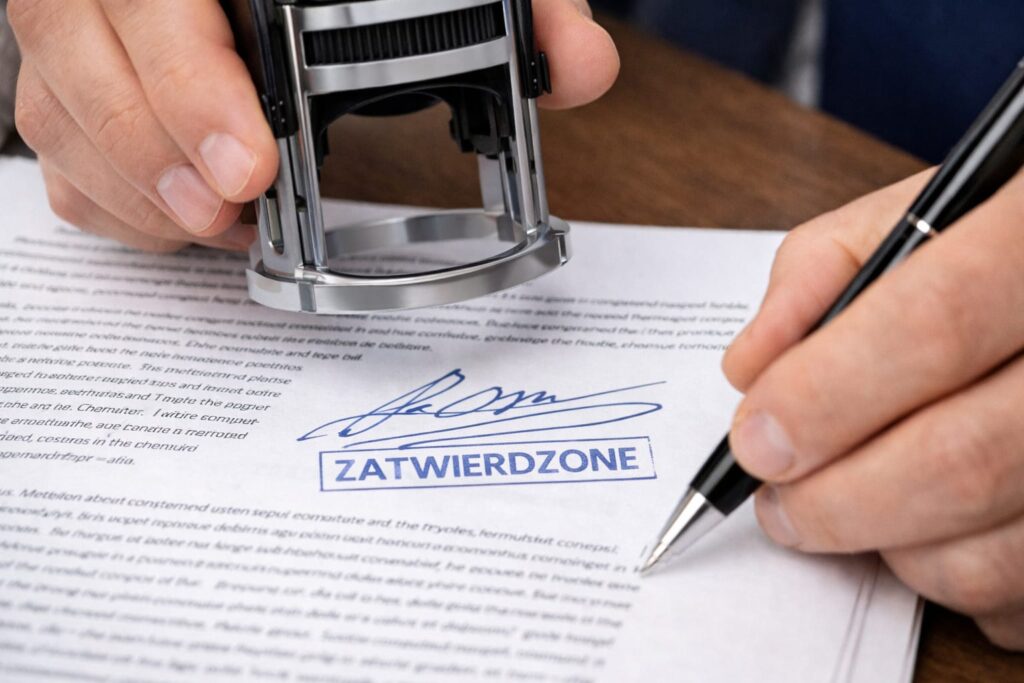
- Translation and Certification – The translator produces an accurate translation, adds an official stamp, signature, and date.
- Delivery – Receive the translated document in physical or digital format, ready for submission to authorities.
- Verification (if needed) – Some institutions may check or confirm the translator’s credentials for added authenticity.
Following these steps ensures that the translation is legally recognized and avoids bureaucratic delays.
Required Documents
Common documents requiring sworn translation include:
- Birth certificates
- Marriage and divorce certificates
- Academic diplomas and transcripts
- Employment contracts and work permits
- Court decisions or legal judgments
- Power of attorney or other notarized documents
- Identity documents such as passports
Each document type may have specific requirements for formatting, certification, and authentication.
Common Mistakes Foreigners Make
Foreigners often make errors that slow down their applications:
- Using informal or non-certified translators for official documents
- Submitting incomplete or unclear originals
- Missing notarization or apostille when required
- Relying on machine translation for legal purposes
- Confusing sworn translation requirements with regular translation
Avoiding these mistakes is crucial to ensuring smooth processing of your documents.
Conclusion
Legal translation in Poland is not just about language—it is about compliance, accuracy, and legal recognition. For foreigners, understanding when and how to use sworn translation is essential to avoid delays, rejections, or administrative complications. Using certified translators ensures your documents are correctly translated, officially recognized, and accepted by authorities in Warsaw and across Poland.
If you need sworn translation or certified document translation in Warsaw, professional assistance can make the process smooth and stress-free. Sworn Translator Warsaw offers accurate, legally valid translations for official use, ensuring your documents meet all requirements and deadlines. Contact us to have your documents translated safely and efficiently.
Frequently Asked Questions
What is the difference between a regular and sworn translation?
A sworn translation is certified by an official translator recognized by Polish authorities and is legally valid for official use, unlike a regular translation.
Can I use an online translation for official documents?
No, online or machine translations are not accepted for legal or governmental procedures in Poland. Only sworn translations are recognized.
How long does a sworn translation take?
The timeframe depends on the document type and volume. Typically, a single-page document can be completed in one to two business days, while larger sets may take longer.