Consular Legalization for Polish PCC: Navigating Non-Hague Countries For International Relocation
International relocation requires a flawless collection of official legal paperwork. Therefore, compiling your final migration dossier can quickly become a stressful challenge. Specifically, cross-border immigration agencies demand absolute background verification for foreign workers. This background record is known locally in Poland as the Zaświadczenie o Niekaralności.
However, simply presenting the base document is never sufficient. If you are moving to a nation that does not belong to the Hague Convention, standard verification shortcuts will not work. Consequently, you must secure an official consular legalization for Polish PCC files. This vital step prevents immediate rejections by global authorities. Furthermore, failing to execute this multi-tier sequence correctly will completely invalidate your immigration timeline.
Understanding the Non-Hague Document Verification Framework
The 1961 Hague Convention revolutionized global document sharing. Specifically, it replaced old administrative loops with a single, universal validation sticker. However, many fast-growing financial hubs chose not to sign this international treaty. Consequently, major destinations like the UAE, Qatar, Kuwait, Saudi Arabia, and Thailand maintain traditional security channels.
Therefore, your background certificate requires individual, multi-stamped embassy recognition. This classic administrative process is known as consular legalization. This layout requires manual signature verification across multiple independent government offices. Ultimately, it remains the only format accepted by non-Hague judicial departments, local courts, and ministries abroad.
Why You Must Avoid the Electronic e-KRK Platform
Many digital nomads use the convenient online portal of the Krajowy Rejestr Karny (KRK). Certainly, this system issues a fast electronic background profile. However, this digital layout becomes a major trap for international relocations to non-Hague countries. Specifically, the local portal delivers a secure electronic background asset. This file is completely legal inside Poland. Nevertheless, non-Hague consulates systematically reject home-printed sheets of paper.
The reason behind this rejection is purely structural. Specifically, the Ministry of Foreign Affairs will not legalize a home printout from an electronic system. Therefore, you must avoid the electronic e-KRK path entirely for these specific destinations. Instead, you must obtain a traditional wet-ink certificate from a physical court registry office. Consequently, you secure an uncompromised administrative foundation.
The Structural Blueprint of Consular Legalization for Polish PCC
To achieve legal validity in non-Hague territories, your paperwork must bear multiple wet-ink stamps. First, the document must originate from the National Criminal Register. However, digital portal downloads are completely useless for this process. Specifically, electronic e-KRK files cannot undergo traditional consular legalization for Polish PCC dossiers.
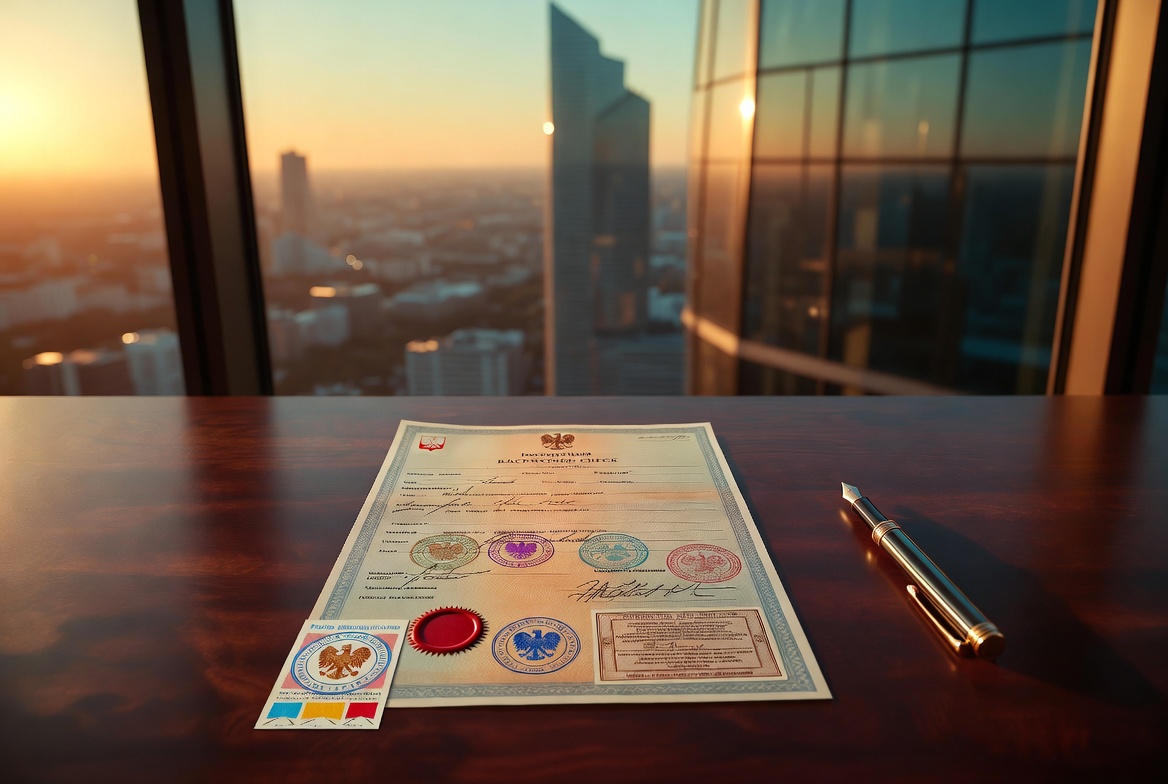
Therefore, you must extract a physical paper certificate. This paper version features an embossed metal court seal and manual signatures. Additionally, the signature must be pre-registered with the central authorities in Warsaw. Without this physical baseline, the entire validation chain collapses before it even begins.
The Step-by-Step Inter-Agency Legalization Pipeline
Navigating the various ministries in Warsaw requires absolute procedural precision. Therefore, any deviation from the certified sequence will result in immediate file rejection. You or your proxy must follow this linear, multi-tiered infrastructure:
1.Physical Document Extraction at the KRK Office:.
First, you must obtain a physical paper copy of your criminal check. Specifically, this must be pulled directly from a National Criminal Register information point. You can find detailed location maps on the official Biznes.gov.pl KRK Registry Guide. The document requires a live, wet-ink signature from an authorized judicial clerk.
2.Pre-Authentication at the Ministry of Foreign Affairs:
Second, transport the document to the Ministry of Foreign Affairs (MSZ) Legalization Division in Warsaw. Specifically, the customer service desk operates on Krucza Street. You can verify appointment booking requirements directly via the official Gov.pl MSZ Legalization Portal. The clerks verify the court official’s identity. Subsequently, they apply the official state legalization stamp.
3.Target Embassy Legalization Verification:.
Third, you must take the MSZ-stamped asset to the target embassy. For example, you will visit the UAE or Qatar consulate in Warsaw. The diplomatic staff will verify the MSZ stamp. Consequently, they attach their final consular legalization sticker.
4.Certified Sworn Translation Execution:
Finally, hand the multi-stamped package over to an accredited expert. Specifically, a registered sworn translator will translate the entire dossier into English or the destination language. This step ensures full cross-border clarity.
Deep Dive into Embassy Specific Regulations
Every non-Hague embassy in Warsaw maintains its own independent set of rules. Therefore, you cannot assume a single workflow applies to all destinations. For instance, the Embassy of the United Arab Emirates requires strict verification of the original document format. Specifically, they require proof of the physical verification trail. Furthermore, the stamp from the Ministry of Foreign Affairs must be entirely visible.
Conversely, other diplomatic missions like the Embassy of Qatar require separate authentication steps. For example, they might demand a secondary check on your academic transcripts if your background check relates to an educational deployment. Consequently, you must track these fluid adjustments continuously. Failing to monitor embassy-specific updates will trigger long delays in your international relocation schedule.
Major Administrative Pitfalls That Cause Embassy Rejections
Many high-earning professionals make critical mistakes due to strict relocation deadlines. For instance, they often assume that a standard Apostille satisfies all global systems. However, non-Hague consular desks will instantly reject an Apostille sticker. Therefore, you must verify the destination country’s exact treaty status.
Additionally, a major failure point involves handling digital printouts. Specifically, if you present a printed copy of an electronic e-KRK file, the MSZ will refuse to process it. Consequently, your relocation timeline will stall completely. Furthermore, some embassies require the sworn translation to occur before the embassy stamp. Conversely, other consulates demand translation after the entire legalization loop finishes. Therefore, you must analyze the exact internal rules of each diplomatic mission.
Global Mobility Management for Relocation Consultants
Corporate relocation consultants face immense pressure when handling international talent transfers. Specifically, executive on-boarding delays cause significant corporate losses. Therefore, managing cross-border paperwork demands absolute reliability. Consequently, outsourcing this complex logistics framework protects your corporate clients.
For example, elite agencies utilize on-the-ground support networks in Warsaw. You can easily manage the corporate document routing through Lex Corporation. In addition, you can secure fully compliant certified legal translations directly from Sworn Translator Warsaw. These specialized local teams act as your direct legal proxy. Consequently, they handle court extractions, coordinate with the MSZ, and manage diplomatic embassy submission lines completely remotely.
Frequently Asked Questions
What is the primary difference between an Apostille and consular legalization?
An Apostille is a single, universal verification sticker used exclusively between Hague Convention members. Conversely, consular legalization is a multi-tiered validation chain required by non-Hague nations. Specifically, it requires separate stamps from the local Ministry of Foreign Affairs and the destination country’s embassy.
Can I use an electronic e-KRK background check for the UAE or Qatar?
No. Specifically, the UAE and Qatar consulates demand a physical, wet-ink paper certificate. The Polish MSZ will not legalize a home-printed digital
.xmlfile. Therefore, you must extract a physical court document.
How long does the entire consular legalization chain take in Warsaw?
The processing timeline depends on the target embassy’s current backlog. Specifically, the MSZ phase takes 2 to 4 business days. However, some non-Hague embassies require up to two weeks to finalize their internal consular stamps.
Does the sworn translation need to cover the embassy stamps?
Yes. Consequently, the certified translation must detail every government emblem, serial number, and hand-written note across all attached validation stamps. If you omit these details, foreign ministries will flag the folder as incomplete.
Where can I double check if my destination country requires consular legalization?
You can verify the global status directly on the official Hague Conference Country List. If your target country is not on that list, you must proceed with consular legalization.
Contact Sworn Translator Warsaw Today
Ultimately, are you ready to start your Polish Apostille remotely? Undoubtedly, we are here to help. Specifically, our expert team guarantees a fast and totally stress-free process. Furthermore, we process documents for clients all over the world.
Therefore, do not waste your time traveling to Warsaw. Instead, let our specialists handle the bureaucracy.
Get in touch with us right now: Sworn Translator Warsaw