
How to Prepare a Polish PCC for the Canadian Express Entry (IRCC) Program: The Ultimate Apostille & Verification Guide
Canada recently joined the Hague Apostille Convention. Therefore, the document compliance pipeline for Immigration, Refugees and Citizenship Canada (IRCC) has fundamentally shifted. Specifically, international applicants navigating the Express Entry track must obtain a flawless Police Clearance Certificate (PCC). This background document is known locally in Poland as the Zaświadczenie o Niekaralności from the Krajowy Rejestr Karny (KRK). Consequently, this verification step is non-negotiable to pass the strict IRCC completeness check.
If you fail to supply a properly formatted background check, your application will be rejected instantly. Specifically, it gets flagged as „incomplete” by case officers. Therefore, this guide breaks down the precise multi-agency layout. We will cover the electronic pitfalls to avoid. Additionally, we explain the exact sequence required to secure a fully compliant Polish PCC completely from abroad.
The Core Requirements for an IRCC-Compliant Polish PCC
To satisfy the strict background verification criteria mandated by Canada, your paperwork must clear a multi-tiered legal validation chain. First, you must prepare it correctly before uploading it to your online portal.
Furthermore, the official IRCC Police Certificate Portal states that documents from Hague Convention countries require full legal apostillation. Consequently, it becomes valid for cross-border case officers to review.
- A Physical, Paper-Based Document: First, the document must be an original hard copy. It must feature the National Criminal Register’s physical embossed metal seal. In addition, it needs a hand-signed signature from a registry official.
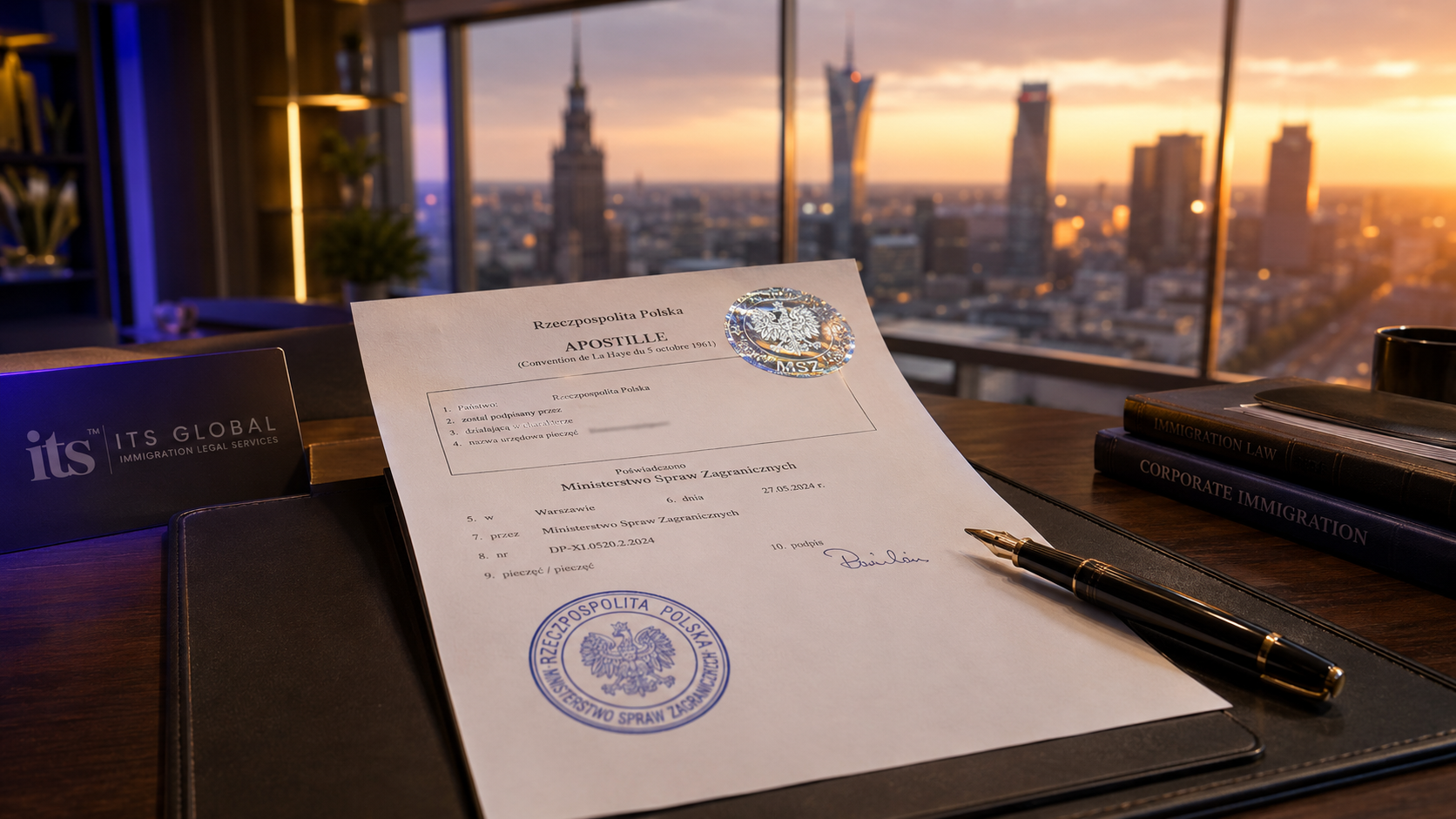
- The Polish MSZ Apostille Clause: Second, your physical certificate must be authenticated. It needs an official Apostille sticker issued directly by the Ministry of Foreign Affairs in Warsaw.
- A Certified Sworn Translation: Finally, because the file is entirely in Polish, you must translate it into English or French. This requires a certified linguistic professional registered directly with the Polish Ministry of Justice. For example, you can secure this official layout through an authorized agency like Sworn Translator Warsaw.
3 Critical Pitfalls That Trigger Automatic IRCC Rejections
Most international applicants attempt to navigate this process independently to save time. However, they routinely fall into three major administrative traps. As a result, their files get canceled during the 60-day Invitation to Apply (ITA) crunch window.
Pitfall 1: The Electronic „e-KRK” Digital Trap
The single most common reason for an application bounce is submitting a printed copy of an electronic background check. For instance, users pull a digital certificate through the official Polish Krajowy Rejestr Karny Portal (e-KRK).
This file is legally valid within Poland for local employment. However, IRCC case officers systematically reject printed copies. The reason is structural. Specifically, the Polish Ministry of Foreign Affairs (MSZ) will not place a physical Apostille sticker onto a home-printed piece of paper. Therefore, an un-Apostilled document fails Canada’s updated international verification standards. Consequently, your file will be disqualified.
Pitfall 2: Skipping the Warsaw MSZ Apostille
Many candidates assume that simply translating a standard paper KRK certificate is enough. However, without the physical sticker attached to your original paper certificate, Canadian immigration considers the document unverified. Therefore, the Apostille must be acquired from the Ministry of Foreign Affairs (MSZ) Legalization Division in Warsaw. This must happen before the document is handed over to a translator.
Pitfall 3: Utilizing Unaccredited Translation Agencies
Canada maintains incredibly rigid rules regarding who can translate legal records. For example, if you hire a standard, non-certified translation agency, the translation will be flagged as unauthorized. This also applies to a translator based outside of Poland who doesn’t hold an active local license.
Therefore, the translation must be performed by an accredited specialist. In addition, the translator cannot just translate the criminal record check. Furthermore, they must translate the entire text, stamp marks, and serial numbers embedded within the attached MSZ Apostille sticker.
The Step-by-Step Document Preparation Timeline
To avoid blowing past your 60-day Express Entry deadline, your documents must follow this precise, linear operational path.
1.Secure the Physical Paper KRK Certificate:
Step 1.
First, you or your legal proxy must submit a hard-copy application at a National Criminal Register branch office. For foreign nationals without a PESEL number, this stage triggers a manual identity check. Specifically, archival databases are cross-referenced against your passport data.
2.Apply for the MSZ Apostille in Warsaw:
Step 2.
Second, once you have the physical certificate, it must go to the Ministry of Foreign Affairs legalization window in Warsaw. After paying the standard administrative state fees, the document is submitted for legalization. Therefore, standard turn-around times range from 2 to 4 working days.
3.Execute the Legally Bound Sworn Translation:
Step 3.
Third, the combined document package is securely passed to a certified expert. This package contains the Paper KRK and the attached MSZ Apostille sticker. Specifically, a registered specialist at Sworn Translator Warsaw translates the technical legal verbiage. Furthermore, they sign the certificate with an official seal and register the transaction inside their state-monitored repertory.
4.High-Resolution Color Scan & Upload:
Step 4.
Finally, the completed, legally bound stack must be scanned in full color. This must include all reverse pages showing the holographic seals and stamps. After that, you can upload it as a unified PDF to your secure IRCC portal.
Quick Reference Summary for Applicants
| Phase | Required Format | Document Processing Timeline |
| 1. Background Extraction | Wet-ink paper certificate with physical judicial seals | 1–2 Business Days |
| 2. Document Legalization | Physical holographic Apostille sticker affixed to the paper | 2–4 Business Days |
| 3. Certified Translation | Signed and stamped English copy bound to the original | 1–2 Business Days |
Frequently Asked Questions
Can I submit an e-KRK PDF printout for Canadian PR?
No. Specifically, IRCC requires an original document with an Apostille. The Polish MSZ cannot place a physical Apostille sticker on a home-printed digital copy. Therefore, an electronic e-KRK printout will be rejected.
Does a Polish background check expire for Express Entry?
Yes. For instance, the certificate must be issued no more than 6 months before your final submission. In addition, for countries where you previously lived, IRCC accepts it if issued after you permanently left.
How can I complete this entire pipeline if I am already outside of Poland?
If you have already relocated, you can utilize a secure remote proxy workflow. For example, you can use specialized legal routing managed by Lex Corporation. In addition, you get certified linguistic processing on-the-ground from Sworn Translator Warsaw. Consequently, the entire pipeline can be completed 100% remotely via courier networks and secure local parcel lockers.
Contact Sworn Translator Warsaw Today
Ultimately, are you ready to start your Polish Apostille remotely? Undoubtedly, we are here to help. Specifically, our expert team guarantees a fast and totally stress-free process. Furthermore, we process documents for clients all over the world.
Therefore, do not waste your time traveling to Warsaw. Instead, let our specialists handle the bureaucracy.
Get in touch with us right now: Sworn Translator Warsaw