How to Order a Sworn Translation of a Polish PCC with its Apostille Sticker: The Ultimate Guide
International relocation requires a flawless collection of official legal paperwork. Therefore, compiling your final legal dossier can quickly become an administrative challenge. Specifically, cross-border immigration agencies demand absolute verification for foreign criminal records. This background document is known locally in Poland as the Zaświadczenie o Niekaralności. However, simply presenting the base document is never sufficient. Consequently, you must secure an official sworn translation of a Polish PCC with Apostille. This vital step prevents immediate rejections by global authorities. Furthermore, failing to execute this sequence correctly will invalidate your entire immigration timeline.
Why You Need a Sworn Translation of Polish PCC with Apostille
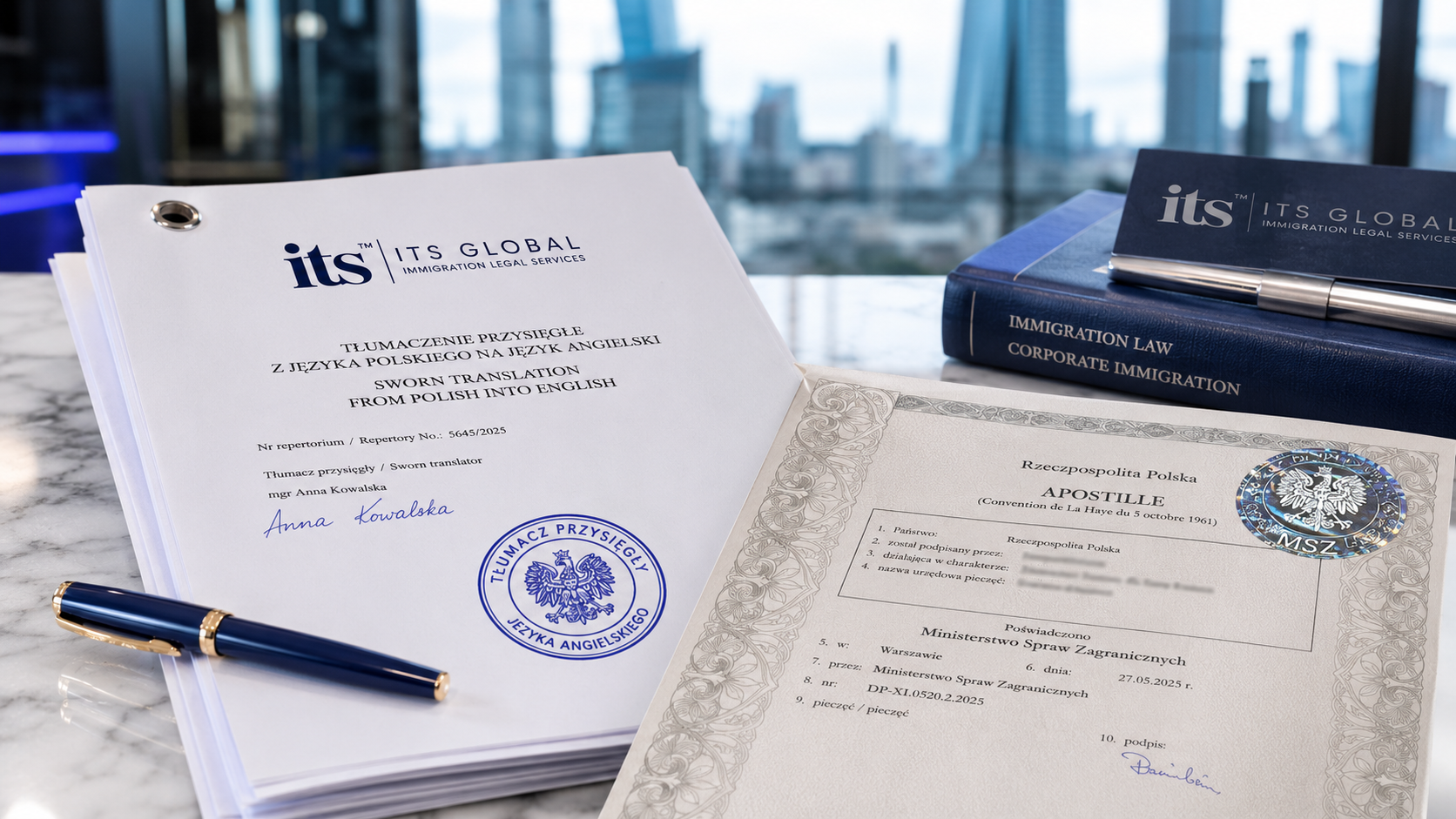
Many immigrants assume that a standard translation of their criminal background check is perfectly acceptable. However, global immigration departments require an extended validation trail. Specifically, you must first legalize the document through the Ministry of Foreign Affairs (MSZ) Legalization Division in Warsaw. This agency applies a holographic verification seal. Subsequently, you must obtain a comprehensive translation. This means a qualified translator must process the core certificate and the attached verification sticker together. Therefore, you cannot treat these elements as separate components. Instead, they must be translated as a single, legally bound unit.
The Sequential Translation Workflow Trap
You might make the critical mistake of ordering translations too early. Specifically, some applicants translate their paper record before getting the Apostille seal. However, this structural mistake invalidates the final paperwork. The reason is simple. In addition to the core penal check, the unique serial numbers on the sticker require full translation. Therefore, your document flow must follow a strict, linear sequence. Consequently, you will avoid paying for duplicate translation services.
Therefore, your structural document flow must follow a strict, linear sequence:
1.Extract the Physical Paper KRK:.
First, secure a hard copy of your record directly from the court registry.
2.Legalize via the MSZ Office:
Second, submit the physical wet-ink asset to the Warsaw branch for apostillation.
3.Order the Certified Translation:
Finally, hand the combined document package over to a professional translator.
Navigating the Administrative Framework of the Krajowy Rejestr Karny
Understanding the underlying judicial infrastructure in Poland is highly beneficial for international applicants. Specifically, the National Criminal Register operates under strict data privacy regulations. Therefore, extracting a paper certificate requires direct, physical submission at a designated court counter. Furthermore, if you are managing this step from abroad without a local proxy, postal delays can consume your entire submission window. Consequently, fast tracking this initial extraction step is absolutely vital. Additionally, background checks for foreign citizens take longer due to required archival name verification. As a result, professional on-the-ground representation in Warsaw saves weeks of administrative processing time.
Specific Rejection Triggers by Global Immigration Authorities
International departments like the Canadian IRCC or the American USCIS maintain extremely rigid guidelines. For instance, they analyze the specific linguistic credentials of your designated translator. Furthermore, they check the exact formatting of the translated Apostille data. If the translator skips the minor text inside the stamp, your file gets flagged. Consequently, this minor omission triggers an automatic rejection. Therefore, working with an accredited specialist is a prerequisite for success. Additionally, global employer networks verify these records through automated credential systems. As a result, any formatting discrepancy will cause major processing delays.
Critical Structural Security Standards for Foreign Dossiers
When you order this service, your documents must fulfill two rigorous verification benchmarks. These specific items ensure your file passes international review boards smoothly.
1. Permanent Structural Binding (Trwałe Spięcie)
For physical hard copies, a certified translator performs a unique binding process. This is known legally in Poland as trwałe spięcie. Specifically, the expert uses official metal eyelets or specialized seals. This structural binding joins the translation directly to the authenticated original certificate. Consequently, foreign courts can instantly verify that the legal package has not been tampered with. Furthermore, this physical link guarantees the long term integrity of the document.
2. Ministry of Justice Registry Verification
Every authorized expert must be listed inside the state registry. For example, you can easily verify these credentials on the official Ministry of Justice Translator Database. Furthermore, foreign consulates cross-reference the unique round seal numbers against this database. If your linguist lacks this official registration, international agencies will reject your entire application. Therefore, verification is an absolute necessity.
Choosing the Right Format: Physical vs. Digital Signed Copies
Modern immigration portals frequently accept electronic paperwork uploads. Therefore, you must decide which format suits your needs.
First, wet-stamped paper dossiers are required by traditional embassies. In addition, they feature physical ink stamps. Second, qualified electronic signatures are secure digital files signed with a Kwalifikowany Podpis Elektroniczny. Consequently, this secure format bypasses international shipping entirely. Therefore, digital options save significant transit time.
If you are coordinating complex cross-border transfers, consider outsourcing to an enterprise coordinator. For example, you can secure corporate assistance through Lex Corporation. In addition, you can handle the precise linguistic side via Sworn Translator Warsaw. These structural partners manage the entire sequence seamlessly.
Frequently Asked Questions
Can a standard translation agency translate an Apostille sticker?
No. Specifically, only an accredited sworn translator registered with the Ministry of Justice can execute this format. Standard agencies lack the official round stamp necessary for international legal validity.
Must the translation include the serial numbers on the sticker?
Yes. Consequently, the translator must detail every stamp, hologram, and handwritten note. If they omit these technical details, foreign offices will flag your file as incomplete.
How long does it take to process a combined translation dossier?
Generally, standard processing requires 1 to 2 business days once the original Apostille is secured. However, turn-around times can fluctuate based on current document volume.
Contact Sworn Translator Warsaw Today
Ultimately, are you ready to start your Polish Apostille remotely? Undoubtedly, we are here to help. Specifically, our expert team guarantees a fast and totally stress-free process. Furthermore, we process documents for clients all over the world.
Therefore, do not waste your time traveling to Warsaw. Instead, let our specialists handle the bureaucracy.
Get in touch with us right now: Sworn Translator Warsaw