Understanding Polish Bureaucracy Through Document Requirements
Introduction
For many foreigners, dealing with official procedures in Poland can feel confusing and slow. Applications for residence permits, studies, work, or civil matters often require specific documents prepared in a very precise way.
The challenge is not only collecting the right documents, but also making sure they meet formal standards set by Polish authorities. One of the most common obstacles is document language. Many applications are delayed or rejected simply because documents are not translated correctly.
Understanding how document requirements work in Poland helps reduce stress, avoid costly mistakes, and complete procedures more efficiently.
What This Means
Polish bureaucracy is document driven. Authorities rely heavily on written evidence, and each document must meet strict legal and formal criteria.
If a document is issued in a foreign language, it is usually not accepted in its original form. In most cases, it must be translated into Polish by a sworn translator.
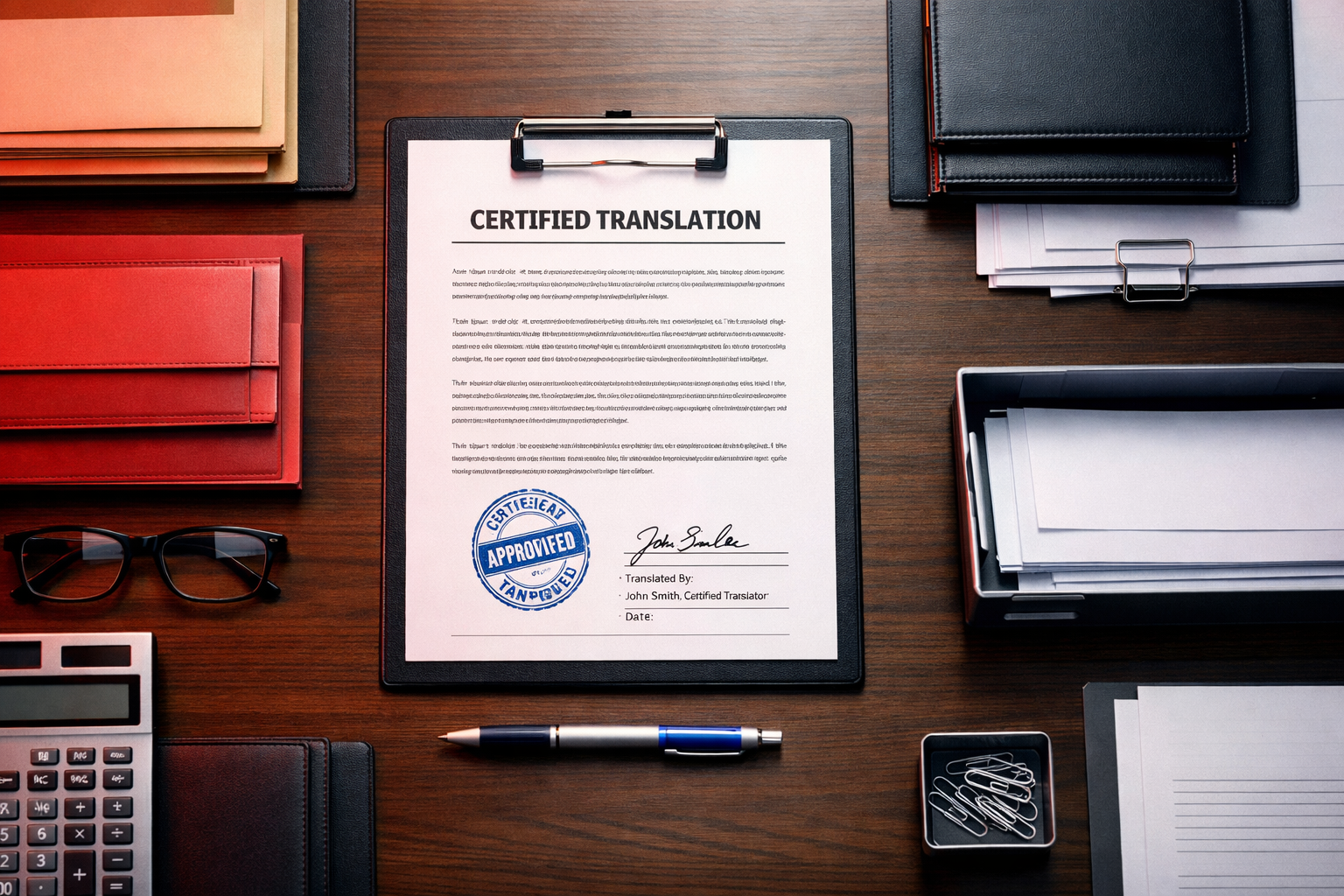
A sworn translation is not just a language conversion. It is a legally recognized version of the document that confirms accuracy and authenticity. The translator is officially authorized and their translation carries legal value in administrative and court procedures.
Without this type of translation, even a valid document may be considered incomplete.
Who Needs This In Poland
Sworn translation becomes necessary in many real life situations involving foreigners. These include:
Residence and Immigration Procedures
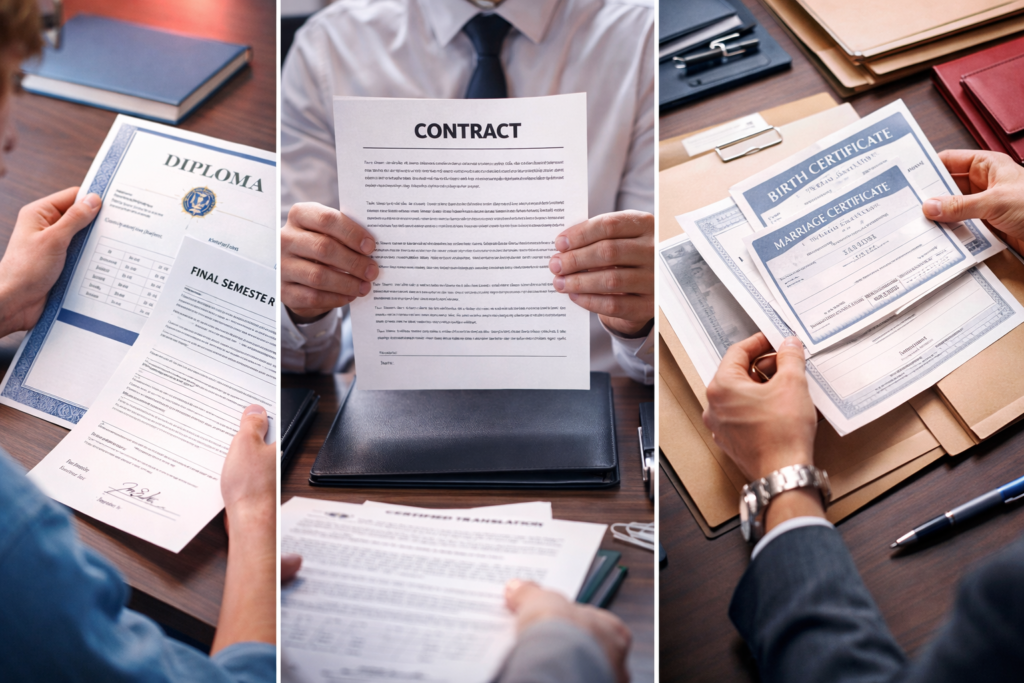
Applications for temporary or permanent residence often require translated documents such as birth certificates, marriage certificates, and proof of income.
Education
International students must submit translated diplomas, transcripts, and certificates when applying to universities or validating their education.
Employment
Employers may require translated qualifications, contracts, or background documents, especially in regulated professions.
Civil Status Matters
Marriage registration, divorce recognition, and birth registration in Poland typically require sworn translations of foreign documents.
Legal and Court Cases
Any foreign document submitted in court must be translated by a sworn translator to be accepted as evidence.
Step By Step Process
Understanding the typical process helps avoid unnecessary delays.
Step One: Identify Required Documents
Each procedure has a defined list of required documents. These lists are usually provided by government offices or institutions.
Step Two: Check Language Requirements
If your documents are not in Polish, confirm whether sworn translation is required. In most official cases, it is mandatory.
Step Three: Prepare Original Documents
Ensure your documents are complete and valid. Expired or incomplete documents may still be rejected even after translation.
Step Four: Obtain Sworn Translation
A sworn translator prepares a certified translation, attaches a declaration, and applies an official stamp and signature.
Step Five: Submit Documents
Both the original document and the sworn translation are submitted together to the relevant authority.
Step Six: Verification by Authorities
Officials review the documents for completeness and compliance. Errors at this stage can lead to delays or rejection.
Required Documents
While requirements vary depending on the procedure, the following documents are commonly involved:
- Birth certificates
- Marriage certificates
- Academic diplomas and transcripts
- Employment contracts or certificates
- Criminal record certificates
- Financial statements or proof of income
- Passports and identification documents
Each of these may require sworn translation if issued in a foreign language.
Common Mistakes Foreigners Make
Understanding frequent errors can help you avoid them.
Submitting Non Translated Documents
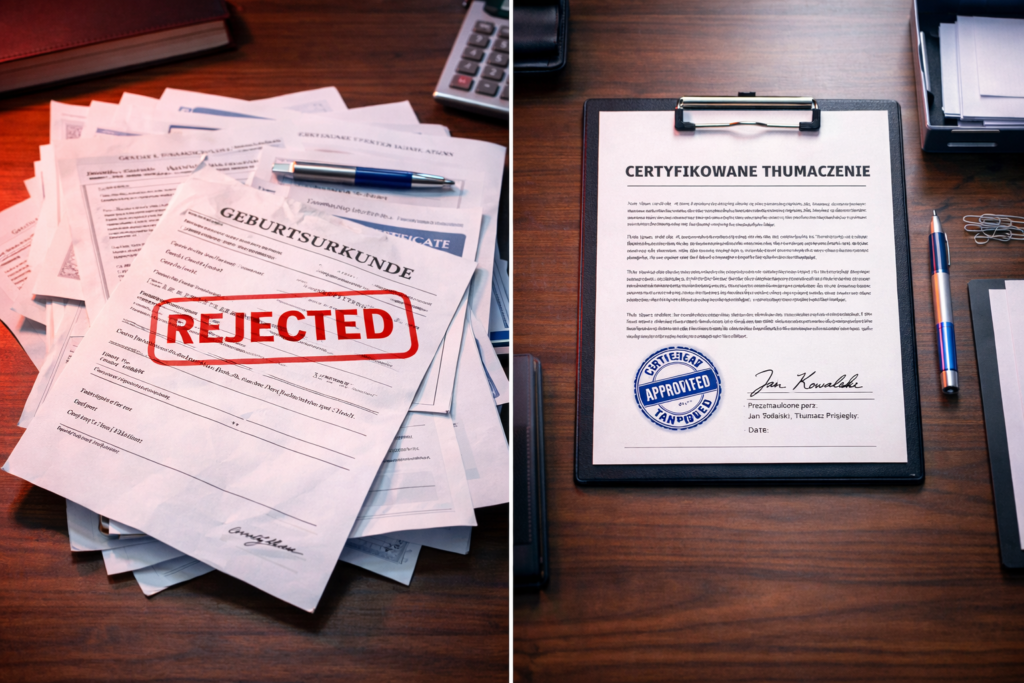
Many applicants assume English documents are accepted. In most cases, Polish authorities require translations into Polish regardless of the original language.
Using Non Certified Translators
Translations done by unqualified individuals are not legally valid. Only sworn translators are recognized for official purposes.
Incomplete Documentation
Missing pages, unclear scans, or partial translations can lead to rejection.
Ignoring Formatting Requirements
Official translations must follow specific formats. Even small deviations can cause issues.
Last Minute Preparation
Waiting too long to arrange translations can delay your entire application process.
Conclusion
Polish bureaucracy relies on precise documentation and strict formal rules. For foreigners, the key challenge is not only gathering documents but ensuring they meet legal requirements, especially regarding language.
Sworn translation plays a central role in making foreign documents valid in Poland. Understanding when and how to use it can save time, prevent rejection, and make the entire process smoother.
If you are preparing documents for official use in Poland and need accurate and legally valid translations, Sworn Translator Warsaw can assist.
Their team provides sworn translations that meet Polish legal standards, helping you navigate administrative procedures with greater confidence and fewer delays.
Frequently Asked Questions
Question One
Do all foreign documents need sworn translation in Poland?
In most official procedures, yes. If the document is not in Polish, authorities typically require a sworn translation.
Question Two
Can I translate documents myself or use online tools?
No. Self translations and automated tools are not accepted for legal or administrative purposes.
Question Three
How long does sworn translation take?
It depends on the document type and length. Simple documents may be completed quickly, while complex legal texts may take longer.